
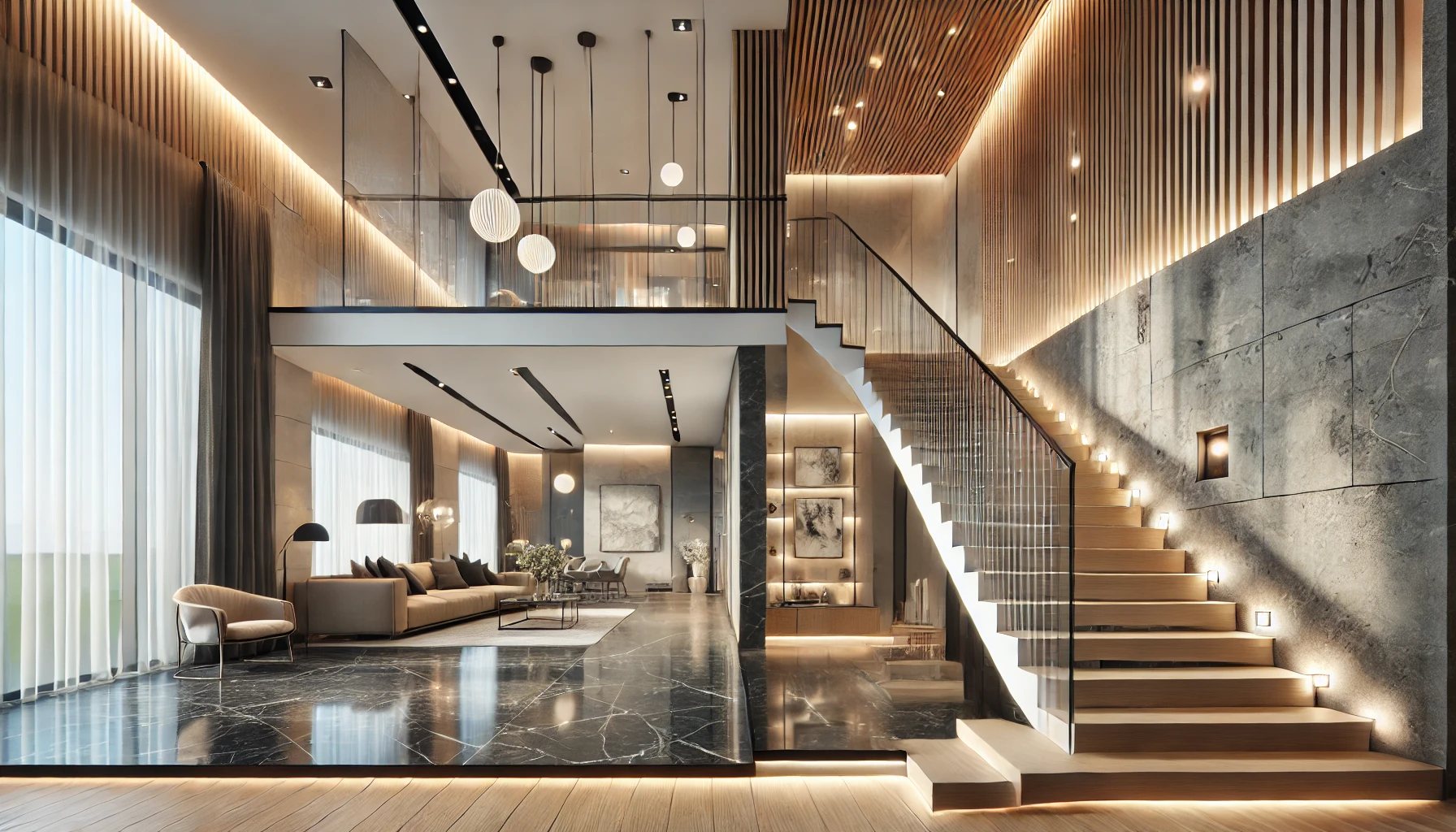
Smart Home Technology for Custom Builds in Ottawa — The Complete Builder’s Guide
Why Smart Home Technology Belongs in New Custom Homes
If you are building one of Ottawa’s new custom homes, smart home technology is not a luxury add-on — it is a fundamental design decision that belongs in your planning from day one. The reason is simple: wiring infrastructure is cheap during construction and expensive to retrofit. Running structured wiring, conduit, and low-voltage cabling through open walls before drywall goes up costs 60–80% less than cutting into finished walls later.
The mistake most homeowners make is treating smart home systems as an afterthought — something to “add later.” By then, you are limited to wireless-only solutions that are less reliable, dependent on battery power, and unable to deliver the seamless integration that hardwired systems provide. When you build custom homes with smart infrastructure from the start, you create a home that gets smarter over time without tearing into walls.
At Custom Home Builder Ottawa, we integrate smart home planning into our design-build process. Our architects collaborate with low-voltage specialists during design to ensure every room has the wiring infrastructure to support current and future technology. This approach is what separates thoughtfully designed luxury custom homes from houses where technology was bolted on as an afterthought.
Core Smart Home Systems for Custom Builds
Smart home technology spans six core categories. Understanding what each system does, what it costs, and what infrastructure it requires helps you make informed decisions during the design phase of your custom home.
The Wiring Infrastructure That Makes It All Work
The most critical smart home decision you will make during your custom home build is not which devices to buy — it is what wiring to install in the walls before drywall closes them up. Devices change every 3–5 years. Infrastructure lasts the life of the house. Here is what experienced builders of custom homes specify for smart-ready construction.
🔌 Smart Home Wiring Essentials — Specify During Construction
Structured wiring hub (network closet). A dedicated, ventilated closet or utility area where all low-voltage wiring terminates. This is the brain of your smart home. Include: dedicated 20A circuit, plywood backboard, proper ventilation or small exhaust fan, and cable management. Cost to include during construction: $500–$1,500. Cost to create after: $5,000–$10,000+.
Cat6A ethernet to every room. Run Cat6A cable to every room — minimum two drops per room, four drops in media-heavy rooms (office, family room, theatre). Include drops at every TV location, every camera position, every access point location, and the network closet. Cost per drop during construction: $75–$150. Cost per drop after: $300–$600+.
Wi-Fi access point locations. Hardwired ceiling-mounted access points (Ubiquiti, Ruckus, or similar enterprise-grade) provide dramatically better coverage than consumer routers. Plan one access point per 1,000–1,500 sq ft, centrally located on each floor. Cat6A and power at each ceiling location. This eliminates dead zones permanently.
Conduit for future expansion. Run empty conduit between the network closet and key locations — attic, garage, exterior walls — so future wiring can be pulled without opening walls. This $200–$500 investment during construction saves $5,000+ in future renovation costs.
Neutral wires at every switch. Many smart switches require a neutral wire. Ensure your electrical contractor runs neutral to every switch box — even if you are not installing smart switches initially. This is standard practice in modern custom homes but often missed in renovations.
The total cost for comprehensive smart wiring infrastructure during a custom home build is typically $5,000–$20,000 — a fraction of the overall construction budget that delivers decades of capability. Our building process includes a technology planning phase where we specify every wire run, outlet location, and infrastructure detail before construction begins.
Building a Custom Home? Plan Smart From Day One.
We integrate smart home technology into our design-build process — so your wiring is right the first time.
(613) 454-5850
Smart Home Budget Tiers — What You Get at Each Level
Smart home investment scales to your budget. Here is what each tier delivers in a typical Ottawa custom home build.
Tier 1 — Foundation
$15,000–$30,000
Smart-ready wiring throughout (Cat6A, conduit, neutral wires). Wi-Fi mesh network. Smart thermostats. Smart locks on main doors. Video doorbell. 4–6 Wi-Fi light switches in key areas. EV charging circuit.
Best for: Budget-conscious builds that want to be future-ready without a major upfront investment.
Tier 2 — Integrated
$30,000–$75,000
Everything in Tier 1 plus: Lutron lighting control throughout. Multi-zone HVAC integration. Full security camera system (6–10 cameras). Whole-home audio (6–8 zones). Motorized shading on main living areas. Central automation platform (Control4 or Savant).
Best for: Homeowners who want seamless daily automation and a unified control experience.
Tier 3 — Premium
$75,000–$150,000+
Everything in Tier 2 plus: Ketra/Lutron tunable lighting throughout. Dedicated home theatre. Motorized shading on all windows. Advanced energy management with solar readiness. Full outdoor automation (landscape lighting, irrigation, pool/hot tub). Touchscreen panels in every room. Biometric access control. Whole-home water monitoring and leak detection.
Best for: Luxury custom homes where technology enhances every aspect of daily living.
Room-by-Room Smart Home Planning Guide
Every room in your custom home benefits from different smart technology. This room-by-room guide ensures nothing gets missed during the design phase — because once drywall is up, adding wiring becomes expensive.
Ottawa-Specific Smart Home Considerations
Ottawa’s climate and geography create specific smart home opportunities and requirements that affect how technology performs in your custom home.
Extreme temperature management. Ottawa’s temperature range (-30°C to +35°C) makes smart HVAC especially valuable. Geofencing adjusts temperature when you leave and arrive. Multi-zone control prevents heating empty rooms. Integration with HRV systems maintains air quality during months when windows cannot be opened. Smart humidity control prevents the dry winter air that damages wood floors and millwork in custom homes.
Snow and ice considerations. Heated driveway and walkway systems (hydronic or electric) with smart controls activate based on temperature and precipitation sensors — eliminating manual snow clearing on critical paths. Smart garage doors and exterior cameras need cold-weather ratings for Ottawa conditions. Battery-powered outdoor devices may struggle in extreme cold; hardwired alternatives are more reliable.
Backup power planning. Ottawa experiences ice storms and power outages. Smart home systems should include a backup power strategy — whole-home generator with automatic transfer switch, or battery backup (Tesla Powerwall) for critical systems. Smart panels like Span can prioritize which circuits receive power during outages, keeping essential systems running while shedding non-critical loads.
Water damage prevention. Smart water monitoring and leak detection (Flo by Moen, Phyn, or similar) is especially valuable in Ottawa where freeze-thaw cycles create pipe stress. Whole-home water monitors detect unusual flow patterns and can automatically shut off the main water line before a burst pipe causes catastrophic damage. In luxury custom homes, point-of-use sensors under every sink, toilet, and appliance provide room-level detection. These systems typically cost $500–$2,000 but can prevent $50,000–$200,000+ in water damage.
Choosing the Right Smart Home Platform
The platform you choose determines how all your smart home systems work together. For custom homes, the decision matters because it affects wiring specifications, device compatibility, and the long-term upgrade path.
DIY platforms (Apple Home, Google Home, Amazon Alexa). Best for Tier 1 budgets. Free to use, wide device compatibility, easy setup. Limitations: limited automation complexity, dependent on internet connection, fragmented ecosystem. Suitable for smart switches, thermostats, locks, and speakers. Works well as a starting point with smart-wired infrastructure in place.
Prosumer platforms (Home Assistant, Hubitat). Best for tech-savvy homeowners with Tier 1–2 budgets. Local processing (no internet required for operation), extensive automation capabilities, broad device compatibility. Requires technical knowledge to set up and maintain. Free or low-cost software with significant DIY time investment.
Professional platforms (Control4, Savant, Crestron). Best for Tier 2–3 builds and luxury custom homes. Professionally installed and programmed. Unified control of every system through elegant touchscreens, keypads, and apps. Local processing for reliability. Lifetime support from authorized dealers. Higher upfront cost but significantly better user experience and long-term reliability. Crestron occupies the very top tier for estate-level homes.
Regardless of platform, the most important decision is the wiring infrastructure — because infrastructure supports any platform. If you install comprehensive wiring during construction, you can start with a DIY platform and upgrade to professional systems later without touching walls. Our interior design team works with technology consultants to plan systems that match your budget and lifestyle while keeping future options open.
7 Smart Home Mistakes Custom Home Builders Should Help You Avoid
Even homeowners who plan for smart technology make costly errors when their builder is not experienced with technology integration. Here are the mistakes we see most often — and how to avoid them.
1. Relying entirely on Wi-Fi. Wi-Fi is convenient but unreliable for mission-critical systems. Security cameras, smart locks, and lighting control should be hardwired whenever possible. Wi-Fi works fine for voice assistants, smart speakers, and convenience devices — but not for the backbone of your home automation.
2. Insufficient network infrastructure. A consumer-grade router cannot handle 50–100+ smart devices, streaming on multiple TVs, video conferencing, and security cameras simultaneously. Plan for enterprise-grade networking: managed switches, ceiling-mounted access points, and a dedicated VLAN for IoT devices to keep your smart home secure and responsive.
3. Forgetting the network closet. Smart home gear needs a home — a ventilated closet with dedicated power, patch panels, switches, and equipment rack. Planning this space during architectural design ensures it is properly located, sized, and ventilated.
4. Not running enough cable. Cable is cheap. Labour to pull it later is expensive. When in doubt, run an extra Cat6A drop, an extra conduit, an extra speaker wire. The cost difference during construction is minimal but the flexibility it provides is enormous.
5. Ignoring motorized shade pre-wiring. This is the most common “I wish I had done that” item homeowners mention after moving in. Running power to window headers before drywall costs $50–$100 per window. Adding it after costs $500–$1,000+ per window — if it is even feasible without visible wiring.
6. Choosing devices before infrastructure. Technology changes every 3–5 years. Your home’s wiring lasts 30+ years. Build the infrastructure first, then choose devices. A well-wired home supports any smart platform — today and decades from now.
7. Not involving the builder early enough. Smart home planning must happen during the design phase — not after framing starts. Your builder needs to coordinate with the electrical contractor, low-voltage specialist, and any technology consultants before the first wire is pulled. At Custom Home Builder Ottawa, technology planning is integrated into our design-build process from the first meeting. Find out why design-build is especially critical for technology-integrated custom homes.
Return on Investment — Does Smart Home Tech Pay for Itself?
Smart home technology delivers returns in three ways: energy savings, property value, and quality of life.
⚡ Energy savings: Smart lighting, automated shading, and intelligent HVAC control typically reduce energy costs by 15–25%. On an Ottawa home spending $4,000–$6,000/year on utilities, that is $600–$1,500/year in savings. Over 15 years: $9,000–$22,500 in reduced utility costs.
📈 Property value: Industry research consistently shows that smart home features increase buyer interest and can add 3–5% to sale price. On an Ottawa custom home valued at $1.2 million, that is $36,000–$60,000 in additional value — often exceeding the original technology investment.
🏠 Quality of life: The hardest benefit to quantify but the most meaningful to homeowners. Automated lighting scenes, perfectly controlled climate, whole-home music, and robust security create daily convenience that quickly becomes indispensable. Every homeowner we have built a smart home for says the same thing: “I cannot imagine living without it.”
For a broader view of construction costs and where smart technology fits within your total build budget, see our 2026 Ottawa custom home building cost guide. Homeowners building in specific areas can also reference our neighbourhood guides for Kanata, Stittsville, Orleans, and Manotick to understand local building context. Explore why Ottawa homeowners choose us for technology-integrated custom builds.
Frequently Asked Questions About Smart Homes and Custom Builds
How much does smart home technology cost in a new custom home?
Smart home technology in a custom build typically costs $15,000–$150,000+ depending on scope. A foundation-level setup with wiring infrastructure, smart thermostats, locks, and basic lighting control costs $15,000–$30,000. A fully integrated system with Lutron lighting, whole-home audio, security, motorized shading, and a professional automation platform runs $30,000–$75,000. Premium luxury installations with home theatre, tunable lighting, and comprehensive automation exceed $75,000.
Should I wire for smart home even if I do not plan to install systems right away?
Absolutely — this is the single most important smart home recommendation for any new build. Wiring infrastructure (Cat6A ethernet, speaker wire, shade power, conduit) costs a fraction during construction compared to retrofitting. You can install devices gradually over years, but the wiring must be in the walls before drywall closes. Think of it as future-proofing: the cables support any technology you choose in 5, 10, or 20 years.
What is the most important smart home wiring to include during construction?
If you only do one thing: run Cat6A ethernet to every room (2 drops minimum per room, 4 in media rooms) and install ceiling-mounted Wi-Fi access points. This creates the network backbone that supports every other smart system. Second priority: neutral wires at every switch box and power at every window header for future motorized shades. Third: conduit from the network closet to the attic and garage for future expansion.
Do smart home systems work during Ottawa power outages?
Without backup power, most smart home systems go offline during outages. This is why we recommend either a whole-home generator with automatic transfer switch or a battery backup system (Tesla Powerwall or similar) for custom homes in Ottawa. Smart locks should always have a physical key backup. Professional automation platforms like Control4 resume operation automatically when power is restored, maintaining all your programmed scenes and schedules.
Are smart homes secure from hacking?
Smart home security depends on your network setup. Best practices include: a dedicated IoT VLAN that isolates smart devices from your personal computers and phones, enterprise-grade firewall, strong Wi-Fi encryption (WPA3), unique passwords for every device, and regular firmware updates. Professional platforms like Control4 and Crestron operate primarily on local networks rather than cloud-dependent systems, which significantly reduces exposure to external threats.
Can I add smart home technology to an existing home?
Yes, but with limitations and higher costs. Wireless smart devices (switches, locks, thermostats, cameras) can be added to any home. However, hardwired systems — in-ceiling speakers, motorized shade power, structured ethernet — require opening walls, which is expensive and disruptive. If you are planning a major renovation or home addition, that is the ideal time to add smart wiring to existing spaces while walls are already open.
What smart home features add the most property value?
Security systems, smart thermostats, and smart lighting consistently rank highest for buyer appeal and value-add. EV charging infrastructure is rapidly rising in importance. Whole-home audio and motorized shading are luxury differentiators that appeal to high-end buyers. The underlying wiring infrastructure adds value even when specific devices are not yet installed, because buyers recognize the future capability it provides.
Should I hire a separate smart home installer or use my builder?
The best approach is a builder who coordinates smart home planning within the design-build process. Your builder manages the electrical contractor, low-voltage specialist, and any technology consultants to ensure wiring is installed correctly and at the right time in the construction schedule. Hiring a separate installer after construction often leads to missed wiring, coordination problems, and additional costs.
How much does smart home wiring cost during new construction?
Comprehensive smart home wiring infrastructure during new construction typically costs $5,000–$20,000 depending on home size and the number of wire runs. This includes Cat6A ethernet to every room, speaker pre-wire, motorized shade power, security camera runs, conduit, and a structured wiring closet. For comparison, retrofitting the same wiring into a finished home would cost $25,000–$80,000+ due to the labour involved in opening and repairing walls.
How do I get started with a smart home custom build in Ottawa?
Start by thinking about how your family lives — which rooms matter most, what frustrations technology could solve, and what your budget allows. Then talk to a custom home builder who integrates technology planning into the design process. At Custom Home Builder Ottawa, our free consultations include a technology needs assessment alongside architectural and budget planning. Call us at (613) 454-5850 to start building your smart custom home.
Build a Smarter Custom Home in Ottawa
Technology-integrated design-build. Wired right the first time. Future-ready from day one.
Serving Ottawa, Kanata, Stittsville, Orleans, Nepean, Barrhaven, Manotick & all surrounding communities.
(613) 454-5850